
Inflation rates and interest rates have an inverse relationship –when the rate of interest is decreased, we will see the rate of inflation increase. Opposingly, when the base rate of interest is increased, we expect inflation to fall.
This causation relationship occurs as a decrease in the base rate incentivises the public to borrow and spend money as interest repayments will be lower. As there is more demand in the economy, we will notice demand-pull inflation and see prices rise in the economy.
On the other hand, as the BoE increases the base rate, it becomes more expensive to borrow money and people become more incentivised to save. With less money now being spent, the economy slows, which will lead to disinflation* or possible deflation**.
*Disinflation – Prices are still increasing but at a slower rate.
**Deflation – General price levels in the economy are falling.
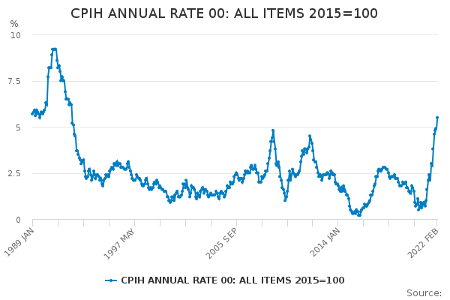
https://www.ons.gov.uk/economy/inflationandpriceindices/timeseries/l55o/mm23
As examples of the above, during the pandemic we had seen low rates of interest to encourage public spending and stimulate economic growth in times of recession.

